

The healing-peptide conversation has gotten loud over the past two years — clinic websites making confident claims, peptide marketers selling stacks, social media reels promising injury recovery in days. What's harder to find is an honest answer to the obvious question: what does the actual research say, organized by the tissue you're trying to heal?
That's what this article is. I'm going to walk through the four compounds people are encountering most often in this space — BPC-157, TB-500, GHK-Cu, and oral collagen peptides — and then by tissue type, lay out what the research actually shows for tendons, ligaments, muscle, bone, joints, and wound healing. Where the evidence is good, I'll tell you. Where it's mostly preclinical, I'll tell you. Where you're being marketed to from a position the data doesn't support, I'll tell you that too.
For depth on any single compound, the deep-dive articles linked throughout are where to go. This guide is the routing layer — the synthesis across compounds and tissues, organized by what people actually ask.
The four compounds people are asking about
There's a recurring trio in almost every "best peptides for healing" article online: BPC-157, TB-500, and GHK-Cu. Then there's a fourth that gets less attention in the wellness space but has substantially more human evidence: oral collagen peptides. Here's how each fits.
BPC-157
BPC-157 (Body Protection Compound) is the most-researched tissue repair peptide in the current wellness-peptide cluster. It's a 15-amino acid fragment of a larger protein naturally found in human gastric juice. Its mechanisms are unusually broad: VEGF-driven angiogenesis (building new blood vessels to injury sites), activation of multiple growth factor pathways (EGF, FGF, HGF), FAK-paxillin signaling for cell organization, and nitric oxide system modulation.
The research depth is real — over 100 preclinical animal studies covering tendon, ligament, gut, nerve, bone, and brain tissue. The caveat is also real: the majority of those papers come from one research group (Dr. Predrag Sikiric's lab at the University of Zagreb), and independent replication, while it exists, isn't at the scale of the Zagreb output. Human clinical trials remain thin. The BPC-157 deep dive covers the full picture including the angiogenesis-and-cancer safety conversation that doesn't show up on most clinic websites.
TB-500
TB-500 is a fragment of Thymosin Beta-4, a 43-amino acid protein found in nearly every cell in the human body. Its core mechanism is cell migration: it regulates the actin cytoskeleton, which is the molecular machinery cells use to physically move. In the context of repair, that means TB-500 helps repair cells — fibroblasts, immune cells, endothelial cells, satellite cells in muscle — actually reach injury sites and start working.
TB-500 also has anti-fibrotic effects (reduced scar formation) and anti-inflammatory modulation. Most of the research is preclinical, primarily in tendon, ligament, muscle, and cardiac repair models. TB-500 is on the World Anti-Doping Agency prohibited list, which reflects recognized biological activity rather than safety concerns. The TB-500 deep dive covers actin biology and the broader research base.
GHK-Cu
GHK-Cu is a naturally occurring copper tripeptide first identified by Loren Pickart in 1973. The headline finding came from Broad Institute Connectivity Map analysis showing GHK-Cu influences expression of over 4,000 human genes — roughly 31% of the human genome — shifting expression toward patterns associated with tissue repair, collagen synthesis, anti-inflammatory response, and antioxidant defense.
For healing specifically, GHK-Cu's most-documented effects are in skin and wound healing — collagen production (types I, III, V, VII, XII, XVII), copper delivery to lysyl oxidase for collagen cross-linking, and superoxide dismutase activation for antioxidant defense. It's worth understanding that GHK-Cu sits primarily in the skin/longevity cluster, not the tissue-repair cluster — its relevance for tendon, joint, or muscle applications is indirect. The GHK-Cu deep dive covers the copper biology and the topical-vs-injectable question.
Oral collagen peptides
This one isn't really a wellness-peptide-cluster compound, but it has to be in the conversation because for most healing-and-recovery use cases, it has the strongest human evidence base.
Collagen peptides are hydrolyzed collagen — broken-down collagen protein, taken as a daily oral supplement, regulated as a food rather than a drug. Studies typically use doses in the 5-15g range daily. The human evidence is substantial: a 2024 trial sequential meta-analysis in Osteoarthritis and Cartilage pooled 35 randomized controlled trials in OA patients and found small-to-moderate effects on pain and physical function, and a separate body of evidence shows benefits for body composition and muscle recovery when combined with resistance training.
The honest framing: collagen peptides don't produce the magnitude of effect that injectable wellness peptide marketing suggests is possible — but they have actual human evidence, an established safety profile, and zero of the regulatory or sterility concerns that come with the injectable cluster. Sol Report doesn't cover collagen peptides as a primary research compound because they sit outside the editorial focus on wellness peptides — but it would be misleading to leave them out of a healing guide.
Tendons and ligaments
This is where BPC-157 has its strongest preclinical case. The Zagreb laboratory has published multiple papers from 2003-2018 showing accelerated Achilles tendon healing in rats, including a 2018 study specifically on tendon-to-bone integration that's directly relevant to rotator cuff and similar injuries. The mechanism involves both VEGF-mediated angiogenesis and enhanced collagen deposition at the repair site.
TB-500 complements BPC-157's contribution here through a different angle: cell migration. Tendons heal slowly because they're poorly vascularized to begin with, which means repair cells take longer to reach injury sites. TB-500 enables those cells to migrate more effectively, and its anti-fibrotic properties reduce adhesion formation — the common clinical problem where healing tendons stick to surrounding tissue and limit range of motion.
Ligament repair models show similar patterns: BPC-157 accelerating repair signaling and TB-500 supporting cell migration into poorly vascularized tissue. As with the rest of the wellness-peptide research base, the evidence is overwhelmingly preclinical. The currently active human trial worth knowing about is NCT07437547, studying BPC-157 for acute hamstring strain — that's the kind of human data the field actually needs.
For someone researching the tendon/ligament question, the right route in is the BPC-157 deep dive (which covers the tendon research in detail) and the TB-500 deep dive.
Muscle recovery
The muscle picture is split between several distinct mechanisms.
TB-500 acts on muscle through satellite cell biology. Satellite cells are the resident stem cells of muscle tissue — normally quiescent, sitting on the surface of muscle fibers waiting for a damage signal. When muscle is injured, they activate, migrate to the damage site, proliferate, and fuse to form new muscle fibers or repair existing ones. TB-500 enhances each of these steps, particularly migration. Tokura and colleagues (2011) demonstrated this in a cardiotoxin-induced muscle injury model with measurable improvements in fiber regeneration and force generation.
Growth hormone-releasing peptides — CJC-1295 and ipamorelin among others — are sometimes discussed in the muscle recovery context because elevated IGF-1 from pulsed GH release supports protein synthesis and recovery. The honest framing is that the muscle-recovery benefit is downstream of GH itself; the GHRH/GHRP peptides are the upstream signal. The growth hormone system explainer covers this in depth, and the peptide stacking guide covers the CJC + ipamorelin synergy specifically.
Oral collagen peptides have a separate, more thoroughly human-validated case for muscle recovery: studies combining collagen peptide supplementation with resistance training have shown improvements in body composition, fat-free mass, and recovery markers after intense training. This isn't muscle repair through receptor pharmacology — it's amino-acid substrate that the body uses for connective tissue synthesis around muscle fibers, plus general protein support. The magnitude is modest but the evidence is robust.
BPC-157 has been studied in muscle injury models too, with the same general angiogenic-and-repair pattern as elsewhere, but muscle isn't its strongest evidence area.
Bone healing
The bone story has two layers worth separating.
The first layer is the wellness-peptide research, which is genuinely thin. The BPC-157 deep dive covers studies showing accelerated bone defect healing in animal models with earlier mineralization, and the broader GHK-Cu deep dive touches on copper's role in bone biology. The combined evidence here is preclinical and not extensive.
The second layer is the FDA-approved option that anyone seriously researching bone healing should know exists: teriparatide (brand name Forteo), a synthetic parathyroid hormone peptide that's FDA-approved for severe osteoporosis and stimulates new bone formation. It's a prescription drug, used clinically for genuine bone-density indications, with daily subcutaneous injection. It's not in the same regulatory category as the wellness peptides discussed elsewhere in this guide.
For most people healing a routine fracture without an underlying bone-density problem, neither the wellness peptides nor teriparatide are the standard of care — that role belongs to surgical management, immobilization, and physical therapy. For someone with severe osteoporosis, teriparatide is the FDA-approved peptide-based option, and that's a conversation to have with a physician.
Oral collagen peptides have a smaller body of evidence on bone density too, with some studies showing modest benefits when combined with weight-bearing exercise — much smaller magnitude than teriparatide, but a low-risk adjunctive option for some people.
Joint pain
The joint-pain conversation deserves its own honest treatment because of how often it's discussed in a way the evidence doesn't actually support. The short version is that the evidence is mostly preclinical for the injectable wellness peptides, oral collagen peptides have the strongest human evidence in this segment (a 2024 OA meta-analysis pooling 35 trials in roughly 3,165 patients showed small-to-moderate effects on pain and function), and the question itself is harder to answer than it looks because "joint pain" covers very different conditions.
The Peptides for Joint Pain article is the dedicated walkthrough — it covers why the question is hard to answer, what BPC-157, TB-500, and GHK-Cu actually have evidence for in joint contexts, the collagen peptide picture broken out by population (OA patients vs activity-related pain in athletes), and what an honest clinical conversation looks like. For anyone whose primary interest is joint pain, that's the right starting point.
Wound healing
Wound healing is where GHK-Cu has its strongest and most-replicated evidence base. The mechanism is multi-layered: GHK-Cu activates collagen synthesis genes, delivers copper to lysyl oxidase for collagen cross-linking, modulates inflammatory cytokines (suppressing pro-inflammatory IL-6, IL-1β, TGF-β in pro-fibrotic contexts; upregulating anti-inflammatory mediators), and supports antioxidant defense through SOD activation.
Practically, this shows up in studies where GHK-Cu treatment produces more organized collagen architecture, better tensile strength, and improved cosmetic outcomes compared to untreated controls. Topical delivery has good clinical data for skin-level wound healing; injectable delivery extends GHK-Cu's effects systemically for deeper tissue applications.
TB-500 also contributes to wound healing through cell migration and tube formation in endothelial cells — the cells that line blood vessels. Malinda and colleagues (1999) provided foundational evidence in dermatology showing dose-dependent increases in endothelial cell migration and tube formation in vitro. BPC-157's angiogenesis pathway is relevant here too — building the blood supply that wound tissue needs to heal.
For someone researching wound healing specifically, the GHK-Cu deep dive is the primary reading, with the TB-500 deep dive covering the endothelial migration side.
Post-surgical recovery — brief acknowledgment
A reasonable share of people searching this cluster are post-surgical patients looking for ways to speed recovery. The honest answer for that context is short and important:
Talk to your surgeon. There is no validated peptide protocol for post-surgical recovery. The compounds discussed in this guide were not studied in controlled trials with surgical patients, and your surgical team is the right source for what's safe and appropriate given your specific procedure, healing trajectory, and other medications. Anything you read online about "peptides for surgery recovery" is extrapolation from preclinical data, not clinical evidence in your situation.
This is the part of the cluster where the evidence-to-marketing gap is widest and the audience is most vulnerable. Sol Report has nothing to add to a conversation that starts with "I just had surgery, should I use BPC-157?" — that conversation belongs entirely with the clinician who knows your case.
The pattern across tissues
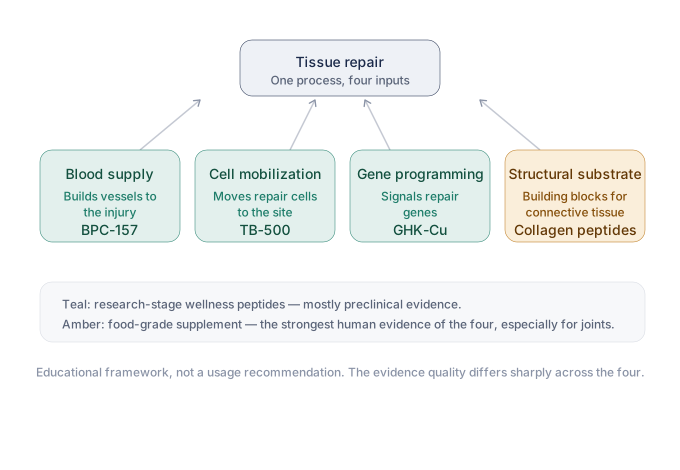
If you've read this far, the same shape probably keeps showing up: BPC-157 contributes angiogenesis and growth factor activation; TB-500 contributes cell migration and anti-fibrotic effects; GHK-Cu contributes gene activation for tissue remodeling and antioxidant defense; collagen peptides contribute structural substrate plus modest but human-validated effects in joint and muscle contexts. This isn't a coincidence — it's because tissue repair is the same basic process regardless of which tissue you're repairing. Blood supply, cell mobilization, gene-level repair programming, and structural building blocks are the four legs of the table. The compound trio plus collagen happens to address each leg.
The peptide stacking guide covers the mechanism-comparison angle in detail, including what people mean by "Wolverine Stack" and why the three-compound framing exists.
The honest evidence picture, summarized
For tendon and ligament injury, the wellness-peptide preclinical case is the strongest in this guide. BPC-157 and TB-500 have meaningful animal-model evidence; human trial evidence is thin but the active hamstring trial (NCT07437547) suggests the field is starting to fill that gap.
For chronic joint pain and osteoarthritis, oral collagen peptides have the strongest human evidence by a meaningful margin — small-to-moderate effects on pain and function in the 2024 OA meta-analysis. The injectable wellness peptides have mostly preclinical data and one case series. The Peptides for Joint Pain article walks through this in detail.
For muscle recovery, TB-500 and growth hormone-releasing peptides each have a mechanistic case; collagen peptides have human evidence at the supplement level. Combining peptide approaches with structured resistance training appears to be where the strongest evidence sits for most outcomes.
For bone healing, the wellness peptides are an unproven adjunctive option; teriparatide is the FDA-approved prescription option for severe osteoporosis; collagen peptides have modest evidence for general bone-density support.
For wound healing, GHK-Cu has the deepest evidence base, particularly topically. TB-500 and BPC-157 contribute through different mechanisms.
For post-surgical recovery, the right answer is your surgeon, not any of the above.
What this guide isn't
This is not a treatment recommendation. None of the compounds discussed have FDA approval for the indications people search them for. The injectable wellness peptides operate in a regulatory landscape that's still evolving (the BPC-157 deep dive covers the 2023-2026 FDA timeline in detail), and the responsible answer to "should I use one of these?" depends entirely on your specific clinical situation and a physician who knows it.
The honest editorial purpose of this guide is to help you read the rest of the internet's healing-peptide content more critically — to know when a clinic website is overstating, when a marketing claim has run ahead of the data, and when a compound that gets discussed less (oral collagen) actually has more human evidence than the one that gets discussed more (injectable BPC-157).
Frequently asked questions
What's the single best peptide for healing?
There isn't one. Different tissues and different healing contexts have different best-evidence options. For chronic joint pain, oral collagen peptides have the strongest human evidence (small-to-moderate effects in the 2024 OA meta-analysis). For tendon/ligament injury, BPC-157 has the deepest preclinical literature in the wellness-peptide cluster. For wound healing, GHK-Cu (especially topical) has the most replicated dermatologic evidence. For severe osteoporosis, teriparatide is the FDA-approved option. The "single best" framing is what marketing wants you to ask; the honest answer is "best for what, in whom, with what evidence quality."
Are any of these peptides FDA-approved?
For the wellness peptides discussed here (BPC-157, TB-500, injectable GHK-Cu): no, none have FDA approval for any indication. They've moved through Category 2 restriction and an expected move back to Category 1 for licensed compounding pharmacies, but that's a supervised access channel, not drug approval. For oral collagen peptides: regulated as food supplements, no FDA drug approval needed. For teriparatide: FDA-approved for severe osteoporosis, available by prescription.
Can I take peptides for muscle recovery from workouts?
This is one of the better-supported use cases in the cluster. Oral collagen peptides combined with resistance training have multiple human trials showing improvements in body composition and recovery markers. Growth hormone-releasing peptides (CJC-1295 + ipamorelin) have mechanism support for recovery, covered in the growth hormone system guide. TB-500 has preclinical evidence for satellite cell activation. None of these are FDA-approved for muscle recovery specifically.
What about BPC-157 for old chronic injuries?
The animal data for BPC-157 is mostly in acute injury models — measurable changes in tissue healing markers within days of starting administration. Chronic human injuries that have been present for months or years don't necessarily map cleanly onto those timelines. Clinicians familiar with this space typically describe a multi-week evaluation window rather than overnight results for chronic presentations. The BPC-157 deep dive covers timelines in more detail.
How do these compare to PRP or stem cell therapy?
That's a clinical comparison question that's outside this guide's scope. PRP (platelet-rich plasma) and stem cell therapies are separate intervention categories with their own evidence bases — they're not "competitors" to peptides; they're different therapeutic options for different clinical situations. The American Orthopaedic Society for Sports Medicine and similar bodies publish guidance on how these compare for specific orthopedic indications. If you're choosing between intervention categories, that's a conversation with an orthopedic or sports medicine specialist, not an editorial decision.
Is the Wolverine Stack just for tissue healing?
The "Wolverine Stack" is the informal name for combining BPC-157 and TB-500, with GHK-Cu sometimes added as a third. The peptide stacking guide covers what the stack actually means at the mechanism level. It's a framework for understanding why these compounds get discussed together, not a usage recommendation.
Related Reading
Read more: Peptides for Joint Pain — the dedicated cautious walkthrough
Read more: BPC-157 is the most-researched tissue repair peptide
Read more: TB-500 enables cell migration through actin regulation
Read more: GHK-Cu activates 4,000+ genes for tissue remodeling
Read more: The science of peptide stacking — how Wolverine Stack mechanisms combine
Read more: What are peptides? A science-first primer